If my name was The Lorax, would you listen?
You’ve got dreams, aspirations and needs for your property, for your home. A tree is in the way. We see trees commonly taken down for development. Tree replacement requirements can dictate planting two or more young trees for each one removed. But what happens while waiting for those replacement trees to grow?
In San Luis Obispo County, Justin Vineyards’ 2016 clearing of oak woodland for vineyard expansion sparked public outrage. The following month, the County adopted an emergency ordinance protecting native trees.
In October 2026, contractors working on the federal border wall cut down the last of four old cottonwoods in Lochiel, Arizona. The grove was estimated to be up to 250 years old.
Different project. Different justification for removal. Same question.
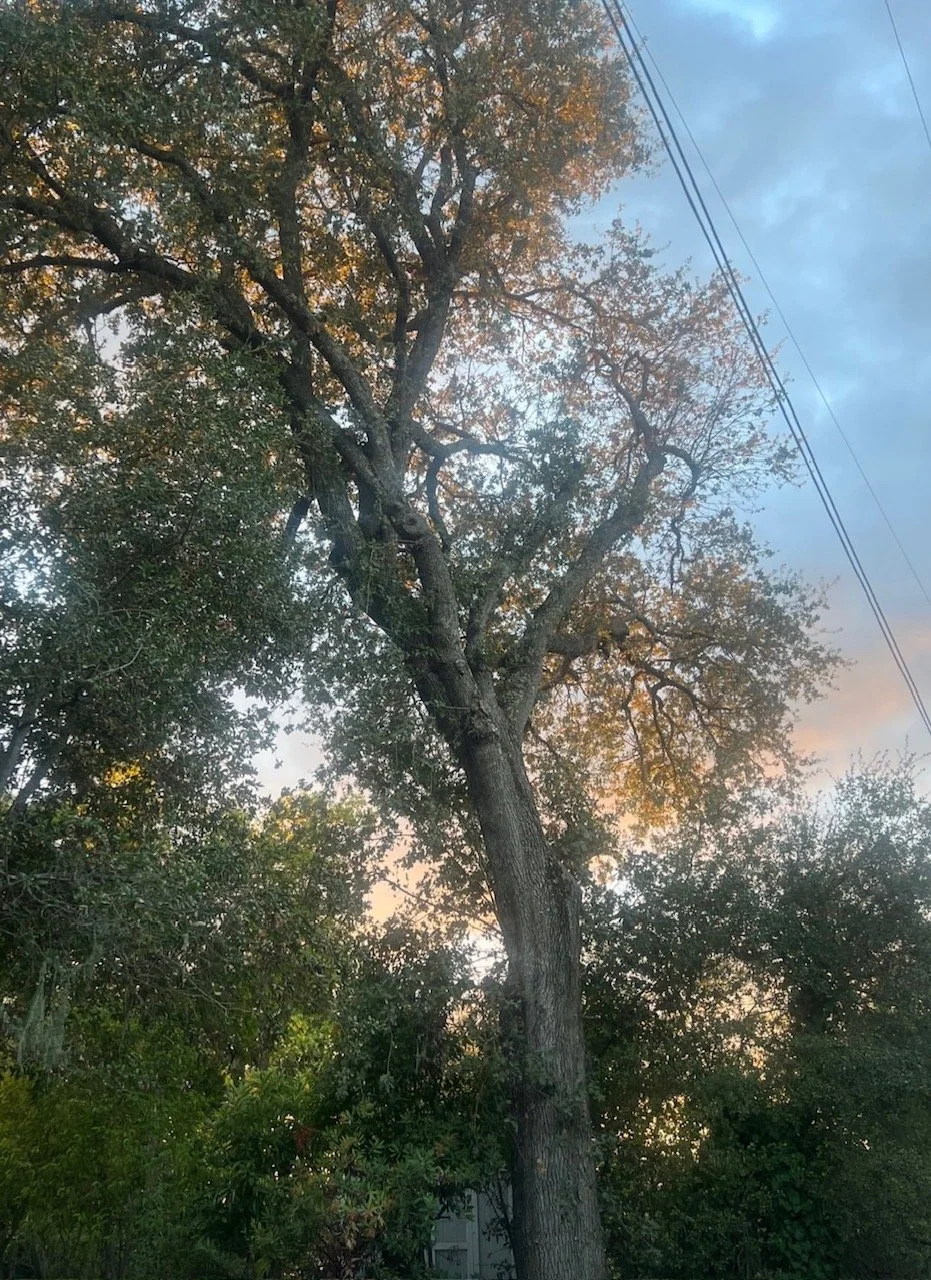
A favorite tree on my daily walk through my Atascadero neighborhood.
At what point does the tree itself get a seat at the table?
Development matters. Agriculture matters. Infrastructure and Public Safety matter. But mature trees seem to become negotiable the moment they conflict with something deemed more important.
The same thing happens on a much smaller scale at home: A homeowner knows a project is coming, knows a tree may complicate the permit, and removes it first.
The City of Atascadero specifically warns against removing protected native trees ahead of construction to avoid the permitting process; doing so can require increased mitigation or fees.
Stronger ordinances can be written. Replacement requirements can be increased. The fine can be raised to hurt more.
Once the tree is gone, what exactly did the fine replace?
Not the shade. Not the habitat. Not the carbon it was pulling from the atmosphere. Not the decades it took to grow. At Coastline Design and Development, we believe we can all do better at accounting for these losses.
Building is essential.
When designing homes, we want people to be able to add space for their families, build an Additional Dwelling Unit (ADU), and make their property work for them.
A tree’s condition, safety, and the limitations of a property all deserve consideration. Sometimes removal is necessary. Sometimes the plans need to change. At Coastline Design and Development, we take mature trees into consideration as we design.
We are not starting with an empty lot on paper when there is a mature tree standing on the property.
What are we losing while we wait for a young tree to mature?
Before you decide that tree is in the way, go stand under it on a hot afternoon. Look at where its shade falls. Is it keeping the sun off your living room windows? Is it the reason the kids can play outside or you can sit on the patio after work?
Now picture that same yard without it. Would you still enjoy spending time out there?
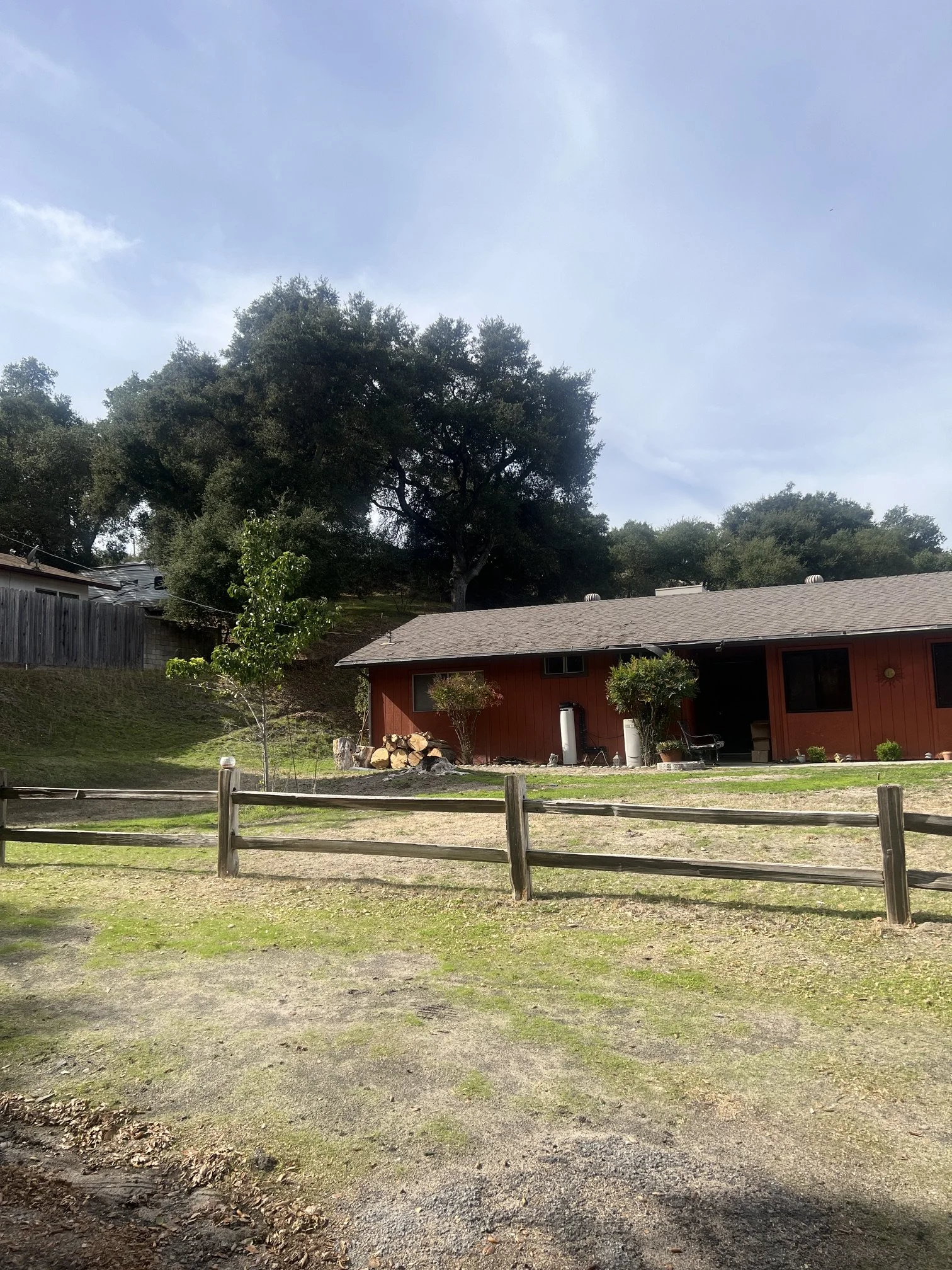
This tree was removed in my neighborhood recently. Whether it was an insurance issue, disease, or simply a preference for another species, I don’t know. What I do know is that it will be a long time before this new tree casts any shade on the house, let alone shades the full roof.
Planting a new tree doesn’t replace the tree that was just removed.
Researchers at the Technical University of Munich describe a wait of roughly 30 years for replacement shade and cooling, assuming the new tree survives. The exact wait will depend on the tree and the site.
The kids playing in your yard today could have children of their own before that shade grows back. While you are living in the house, trying to enjoy the yard, “We planted replacements” doesn’t really address how you will experience those next 30 summers.
There is also nature to consider. Watch the birds coming and going. That tree may be feeding them, sheltering them or holding their nest. The insects on its leaves may be a ‘next meal’.
There is a lot of life in that tree canopy that does not show up on a site plan.
We talk about planting trees to capture Carbon.
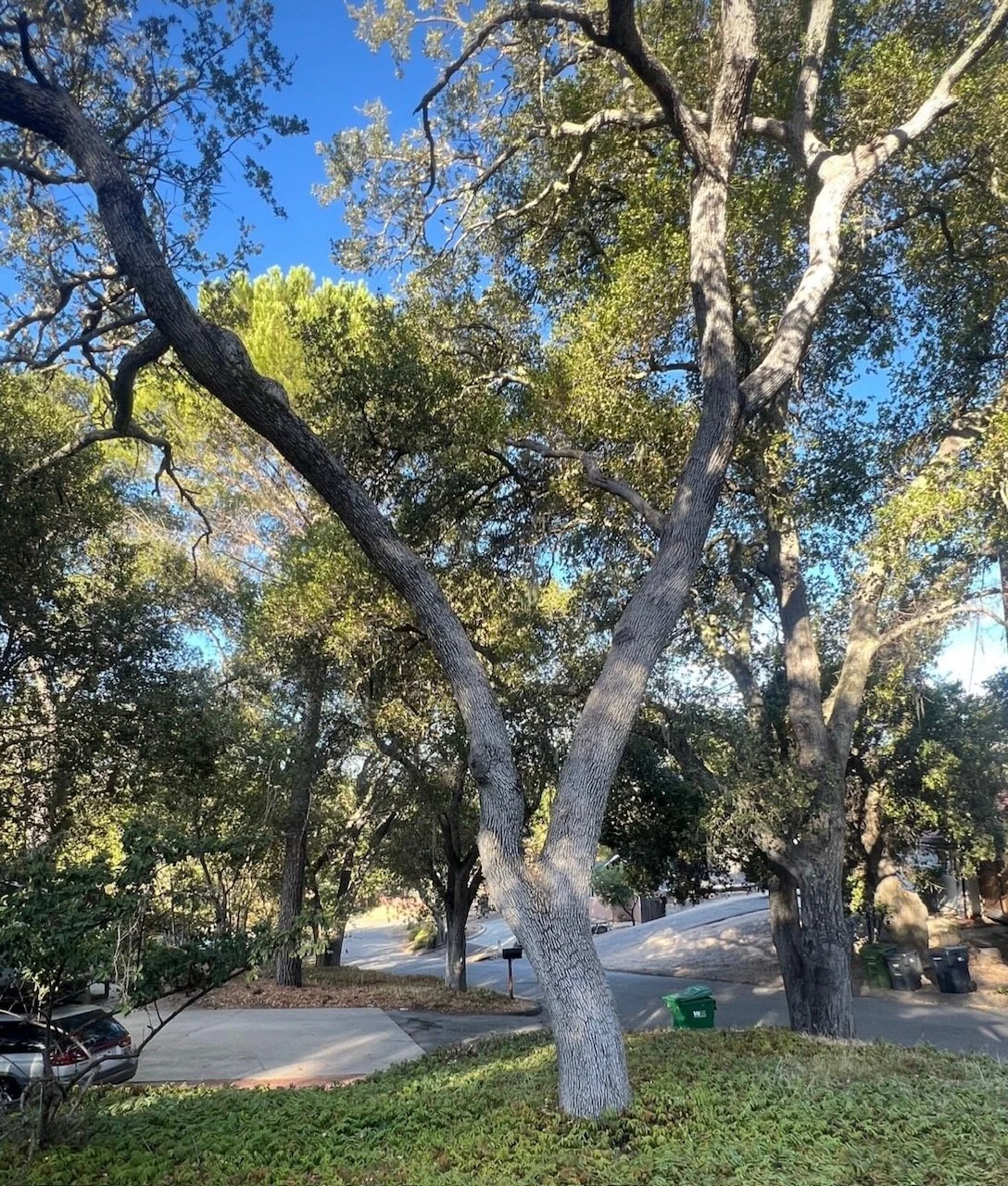
What about the tree already doing that work?
A 1994 USDA Forest Service study of the Chicago area estimated that trees with trunks under roughly three inches in diameter pulled an average of 2.3 pounds of carbon out of the atmosphere per year.
Trees with trunks over roughly 30 inches removed an averaged of 204 pounds of carbon per year.
That is nearly 90 times as much carbon eliminated annually. (These are averages from that study, not a fixed rate for every tree.)
A mature tree is not done contributing just because it’s old. Cutting it down means ‘giving up’ on work it is still doing. It is possible to end up with more trees on the property and still have less canopy.
So much thought goes into making a property work better, but are we about to remove something that already makes it a good place to live?
Can we design around the tree first?
I recommend the tree be part of the conversation before the floor plan is settled; before the driveway is located; before everyone is attached to a design that requires its removal. Could the addition move? Could the utilities take a different route? Could we arrange the outdoor space around the shade that is already there?
These are questions to raise during the feasibility and site planning discussion. An arborist belongs in that conversation too. Keeping the trunk standing is not enough if construction damages the roots or compacts the soil around them. Atascadero’s tree protection requirements address construction around native trees, including grading and utility trenching.
Protecting a tree means planning how the work will happen around it; and when a tree does need to come down, putting some thought into what replaces it.
What should we plant in its place?
I do not recommend that this decision come down to the cheapest tree that satisfies a replacement requirement. I also do not think the answer is automatically the biggest tree in the nursery. A larger tree with a fuller canopy may give you more shade immediately. But a smaller tree may establish more quickly and require less irrigation while it does.
Root condition matters too. A large tree with roots circling inside its container can cause problems that its impressive height doesn’t immediately reveal.
Ask at the nursery or an arborist which tree size makes sense for your property, and what it will need after planting. Budget for the planting and care, not just the cost of the purchase.
Then, look beyond the size it is today. What will this tree become? Will it shade the house, the sidewalk or the places where people actually spend time? Is there room for its canopy and roots? Who is going to water it after the contractor leaves?
This is what I recommend landscapers, designers and developers account for: “If we are removing large shade trees to build a neighborhood, where will the next generation of shade come from?”
Cal Poly’s SelecTree is a useful place to compare mature tree size and site requirements before choosing what to plant.
I wholeheartedly recommend designing for future shade, not just checking the box that says a tree was planted.
Before we start shopping for replacements
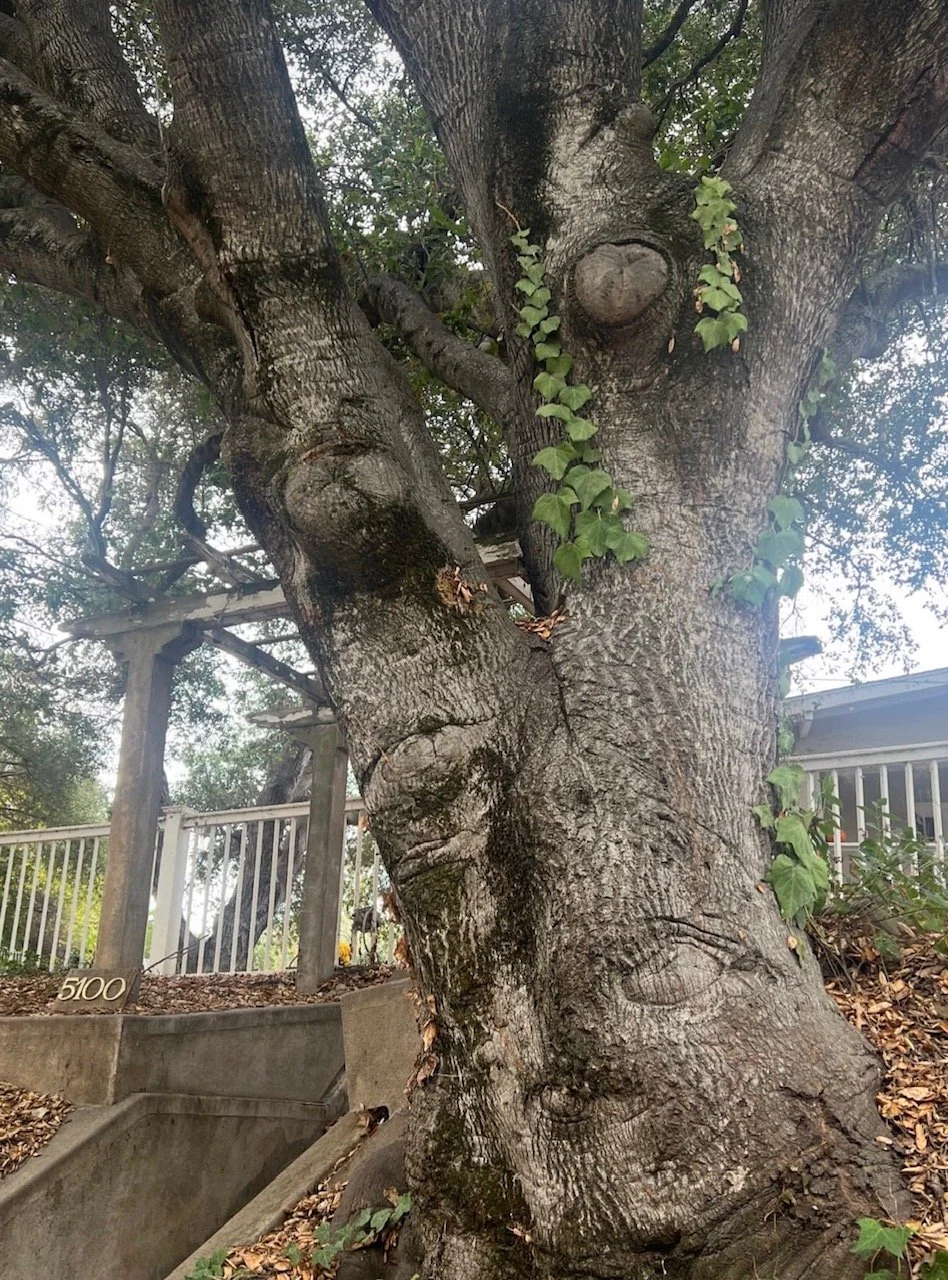
You’ve got dreams and aspirations for your home and your property. You should. The places we live should work for us, support our families and grow with our needs. But good decisions don’t stop at what fits our needs today, or what satisfies the requirements on paper.
That tree may shade a future family’s home, shelter wildlife that depends on it, and still be doing its work decades after this project is finished.
That is the scale I want us to consider.
Not whether we can ever remove a tree. Not whether development should stop. But whether we are making informed decisions about something that may take another generation to replace. We spend a lot of time asking what we can build.
I think we also need to ask what is already here, what it contributes, and what the cost really is if we choose to remove it.
Design for the home you need today. But consider the neighborhood, the environment and the generations that will live with that decision tomorrow.
Someone has to speak for the trees.
I think we should all get a little better at listening.
A few places to start
North County Trees in Atascadero carries native trees and other landscape plants. Contact them about the sizes and species available for your property.
Trees of Antiquity specializes in heirloom fruit trees and seasonal bare-root shipping. Fruit trees can be part of the plan too, though planting for food and replacing a large oak canopy are different goals.
The Arbor Day Foundation offers seedlings as a membership benefit, along with nursery discounts. Check the current terms and tree choices before joining. These are seedlings, not mature replacement trees.
For City of San Luis Obispo residents, ECOSLO’s Neighborhood Tree Planting program offers trees and planting at no cost to participating residents who commit to ongoing care. Check their page for the next application window.